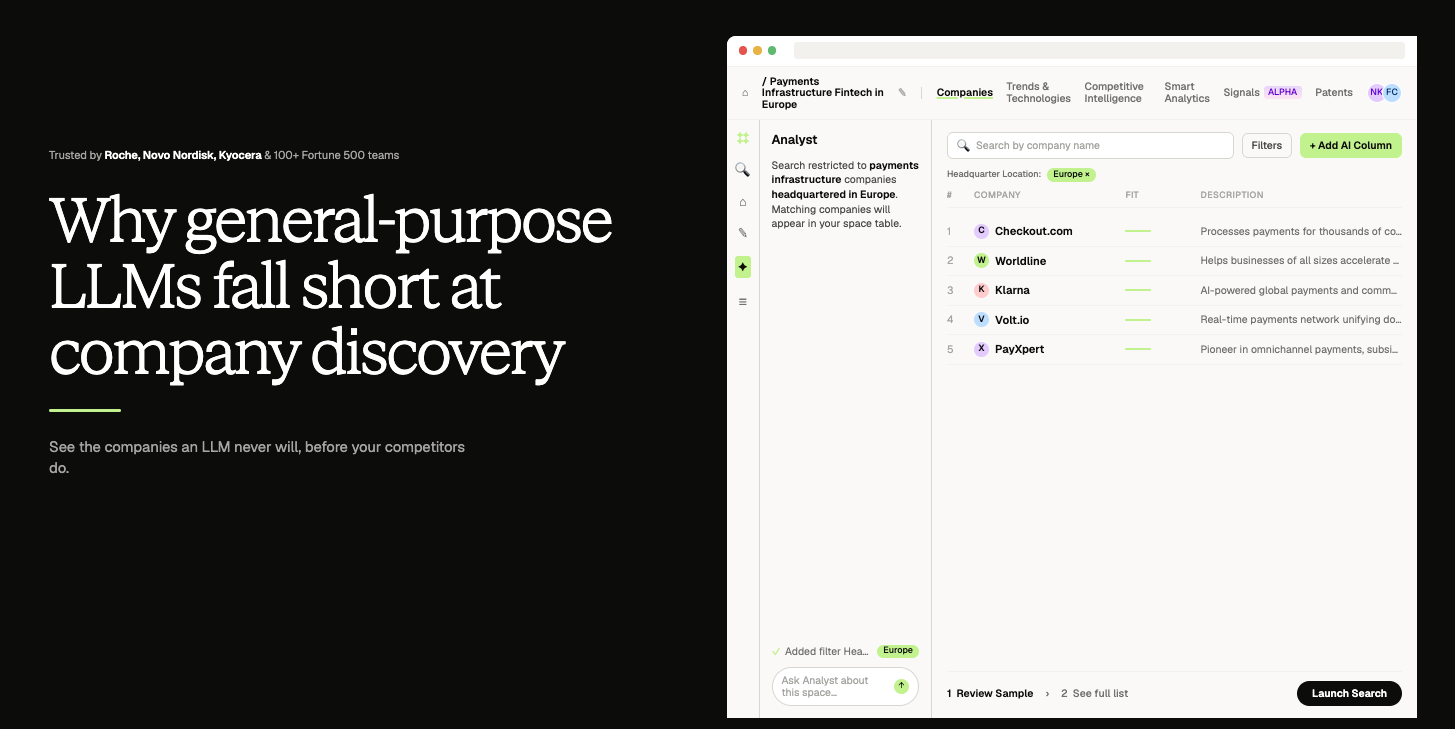



It shouldn’t take 30 slides to get a $10K experiment approved.
Yet for many innovation teams, that’s become the norm, especially in 2025 where there is ever-more scrutiny on every investment and a heightened expectation to deliver results, fast. Far too often, innovation teams create bloated internal pitch processes that mirror VC-level scrutiny for coffee-budget initiatives. Less time on pitch decks equals more time testing and scaling projects.
At FounderNest, we’ve spoken to dozens of innovation and strategy leaders with a common frustration that emerged: internal champions are being asked to justify lightweight experiments with heavyweight decks.
We think that’s backwards, and here’s why, and what you should do instead.
Match innovation slide decks to budget risk
For a $10K pilot or experiment, you don’t need to write a novel. You need a clear, strategic hypothesis. Based on what you’ve learned, the sweet spot for internal innovation decks is:
8–12 Slides Max
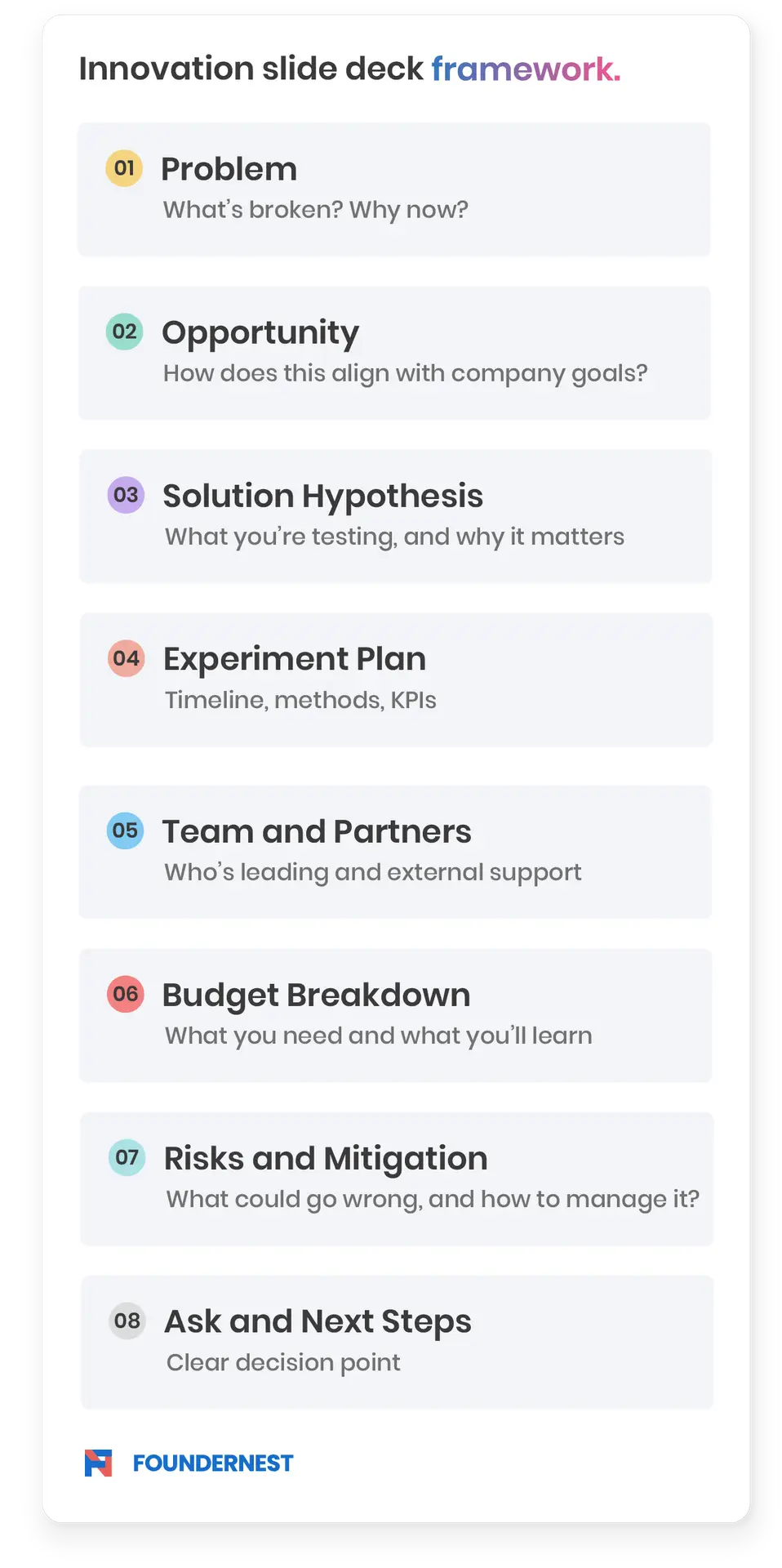
Budget vs innovation deck length
If your ask is small, your storytelling should be simple. Grow your pitch deck in line with the budget size. Be clear and to the point, similar to a startup founder asking for funding.
| Budget Size | Suggested Slide Range |
|---|---|
| Less than $25K | 6–10 slides |
| $25K–$100K | 10–14 slides |
| $100K+ | 14–18+ (with appendix) |
If it’s not integral to summarizing the problem or solution, put it in the appendix.
The real goal: Speed of learning
You’re simply asking for the freedom to test, learn, and adapt rather than a budget request.
Let’s not make internal innovation harder than raising VC money. Instead, push for clarity, brevity, and momentum.
If your team is stuck building slide 28 for a $12K pilot, it’s time to flip the script.
Want to pitch leaner?
FounderNest helps innovation teams distill complex ideas and research into decks and data rooms that get buy-in, without the bloat.
Request a demo to learn how we help internal champions move fast.

Market Report